Optical illusions are intriguing visual tricks that push your brain to interpret information in unexpected ways. These mind-bending images often mislead your vision, making you see something different from what actually exists.
From disguised shapes and numbers to cleverly arranged objects, illusions encourage your brain to work harder to uncover the real picture. This makes them enjoyable and beneficial for sharpening focus, improving concentration, and boosting observational skills.
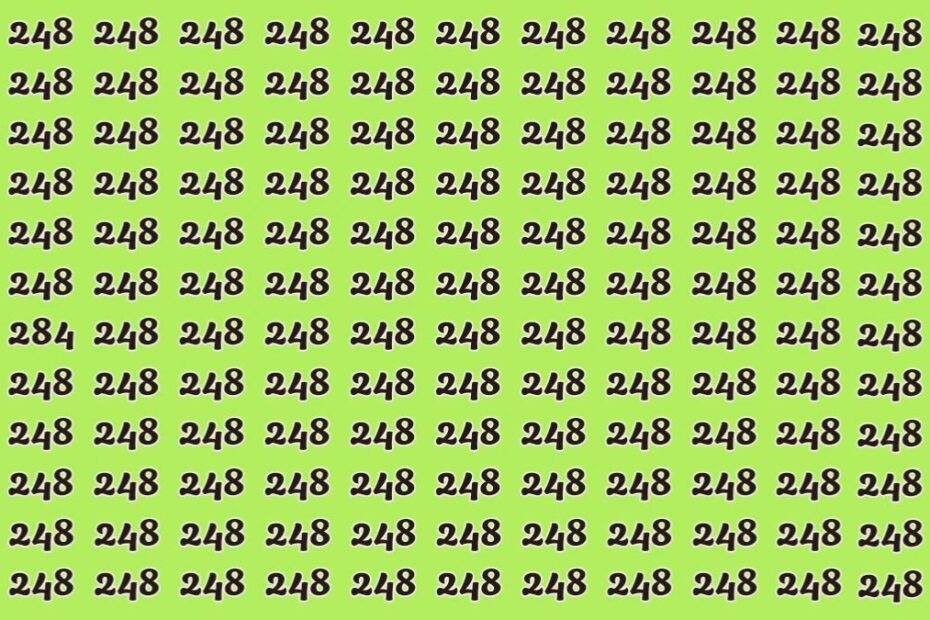
Today’s challenge puts your attention to the test. Your mission? To locate the number 284 hidden among a cluster of 283s—and you only have 7 seconds to spot it. Think you can do it? Let’s begin!
The Challenge: Find the Number 284 Among 283s
The timer starts now! Somewhere within a sea of identical-looking 283s, the number 284 is camouflaged with precision. Your task is to detect the odd number quickly, relying solely on your ability to identify small visual differences.
At first glance, the numbers may seem completely uniform, but the slightest variation distinguishes the correct answer. This illusion provides the perfect opportunity to test the strength of your visual processing skills.
Tips to Spot the Hidden Number in Under 7 Seconds
1. Maintain a Calm and Steady Focus
Take a moment to relax your eyes before you begin. A calm mind improves your ability to notice fine details.
2. Scan the Image With a Methodical Approach
Start examining the image from the top-left corner, moving row by row. This prevents you from overlooking any area.
3. Pay Attention to Minute Differences
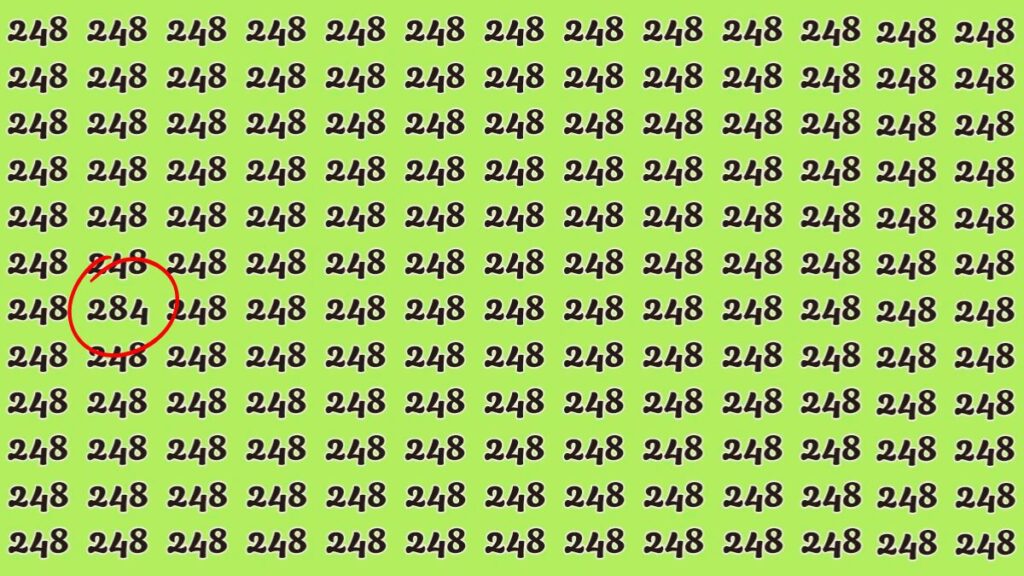
The contrast between 283 and 284 is slight—just a shift in one digit. Look closely for any numerical inconsistency.
4. Use a Self-Timed Countdown
Challenge yourself with a strict 7-second window. If you don’t find it the first time, repeat the process and try again.
Did You Spot the Odd Number?
Here is the hidden number:
What Makes Optical Illusions Work?
Optical illusions occur because the brain interprets visual signals based on patterns, assumptions, and learned behavior. When the information your eyes take in is extremely similar—such as numbers that differ by only one digit—your brain may misinterpret or overlook slight changes.
By repeatedly practicing visual challenges like this, you train your brain to detect subtle variations more quickly. This improved perception can benefit not only puzzle-solving but also daily tasks that rely on visual accuracy.
Why Do People Love Optical Illusions?
Optical illusions have fascinated observers across cultures and generations. The excitement of solving a visual puzzle combined with the satisfaction of discovering the hidden truth makes them enjoyable for all ages.
Beyond entertainment, they offer valuable cognitive exercise, helping to strengthen memory, attention span, and problem-solving skills.
Optical illusions offer far more than a moment of fun—they also enhance your mental clarity and observational abilities. This 7-second challenge of finding 284 hidden among 283s demonstrates just how powerful and deceptive visual patterns can be.
With continued practice, you can sharpen your eye for detail and become increasingly skilled at identifying subtle differences in any visual setting.
FAQs
Why is the number 284 hard to find in this illusion?
Because 284 closely resembles 283, the minimal numerical variation can easily blend in, making it difficult for the brain to spot the difference quickly.
Do optical illusions improve cognitive skills?
Yes. Regularly engaging with illusions can strengthen focus, attention to detail, and overall visual processing abilities.
Can children benefit from optical illusions?
Absolutely. Optical illusions help children develop stronger observational skills and make learning more interactive and enjoyable.