
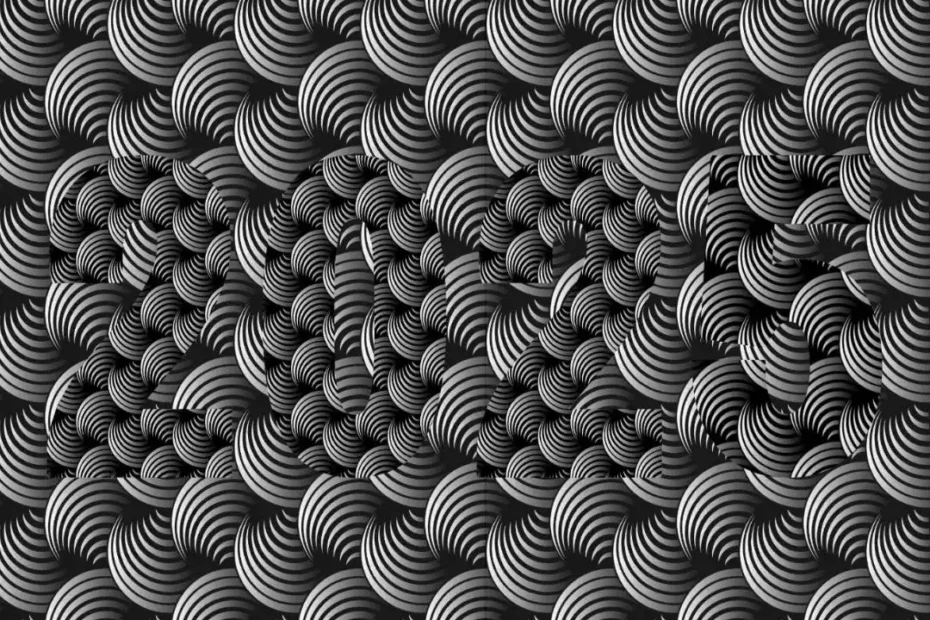
This intriguing optical illusion invites viewers to find a hidden word buried within swirling black-and-white lines.
More than just a visual puzzle, it sharpens your attention to detail, evaluates eye strength, and reveals how the brain deciphers complex patterns.
Why Optical Illusions Capture Our Attention
Optical illusions have long fascinated people because they blend visual science, psychology, and art into unforgettable experiences.
The illusion in question features hypnotic black-and-white curves. Somewhere within this maze-like artwork, a cleverly embedded word waits to be uncovered. Can your eyes spot it?
How Optical Illusions Trick Your Brain
Optical illusions distort perception by manipulating contrast, lighting, and pattern repetition. The repeating swirls in this illusion make it challenging for the brain to identify separate shapes.
With careful observation and steady focus, the concealed word gradually separates from the background.
This effect is based on figure–ground perception, a process where your mind tries to distinguish the main subject from surrounding patterns.
Because the shapes appear similar and continuous, your brain must work harder to filter visual noise.
The Hidden Word Puzzle Explained
Take a moment to examine the swirling image. A specific word is subtly blended into the curves. Some viewers detect it instantly, while others take longer to decode its placement.
If you don’t see it right away, don’t worry—these illusions are purposely designed to challenge your visual acuity and pattern-recognition skills.
What Optical Illusions Reveal About Brain Processing
Research from the Journal of Vision shows that illusions can provide meaningful insights into cognitive function.
Studies indicate that the more complex a pattern is, the longer people take to recognize hidden elements. This delay demonstrates how the brain works harder to organize confusing visual data and identify what matters.
These illusions also play a role in:
- Vision testing
- Visual therapy
- Peripheral vision training
- Contrast sensitivity improvement
Psychologists often use them to understand how humans interpret ambiguous or conflicting information.
Helpful Tips To Spot The Hidden Word
If the secret word isn’t obvious right away, try these techniques:
1. Take a Step Back
Viewing the image from a slight distance can help the letters stand out.
2. Adjust Your Zoom
Zooming in or out changes your perspective, allowing your brain to process shapes differently.
3. Scan for Pattern Breaks
Look for unusual shifts or irregularities in the swirls—these often reveal the hidden message.
4. Relax Your Eyes
Don’t stare forcefully. Let your eyes glide naturally across the illusion.
Optical Illusions: More Than Simple Fun
Beyond entertainment, illusions help improve focus, visual coordination, and mental sharpness.
They are also useful in identifying certain vision impairments and understanding how perception shapes human decision-making. These puzzles train the brain to analyze details and strengthen problem-solving abilities.
If you managed to uncover the hidden word, you’ve successfully passed this optical illusion eye test.
For those still searching, try concentrating on the center of the image—where the patterns subtly shift.
Optical illusions continue to fascinate because they challenge our senses while giving us a deeper understanding of how the brain interprets the world around us.
FAQs
Why are optical illusions hard to solve?
Optical illusions confuse the brain by using repetitive patterns, contrast, and shapes that make it difficult to distinguish objects clearly.
Can optical illusions improve vision?
Yes. They are often used in eye training and therapy to enhance focus, peripheral vision, and pattern recognition.
Why do some people see the hidden word faster than others?
Visual processing speed varies from person to person. Factors like attention, eye coordination, and experience with similar patterns influence how quickly the word appears.