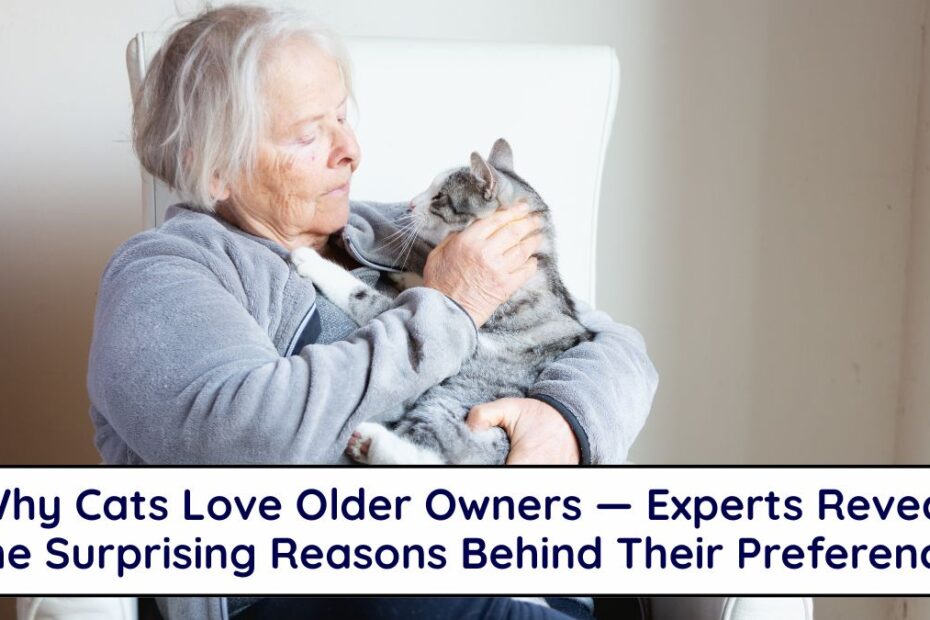
Cats rarely distribute affection without reason. They read their surroundings carefully, favoring homes where peace, predictability, and emotional steadiness dominate.
New research from several European institutions reveals that age-related lifestyle patterns—rather than age itself—play a major role in shaping how deeply cats bond with the humans they live with. Older adults often create the kind of gentle, structured environment that many felines perceive as security.
How Age-Linked Lifestyle Patterns Influence Cat–Human Bonds
A Shift Toward Calm and Predictable Living
Surveys conducted across Europe suggest that owners over 55 generally provide a living environment that cats find more stable. It’s not about loving the animal more—it’s the everyday rhythm that matters.
Survey Snapshot
A University of Bristol study across ten European countries found:
- 63% of cats showed more affectionate and relaxed behavior with owners aged 55+
- Cat affection did not differ by owner age
- The difference lay in routine, energy levels, and daily noise
Behavior experts attribute this to three consistent qualities in calmer households:
- Structured routines
- Soft communication styles
- Fewer mood fluctuations
Cats in these homes were more visible, groomed regularly, and initiated contact on their own—signs of a comfortable, confident feline.
Why a Slow Household Rhythm Matters to Cats
Routine Lowers Stress Hormones
Research from the Royal Veterinary College shows that cats thrive when their days unfold with few surprises.
Key Findings
Cats living in homes with strict, predictable routines recorded:
- 28% lower cortisol levels
- Better grooming patterns
- More consistent rest cycles
This had nothing to do with the quality of toys or size of the house—it was consistency that mattered.
Older adults typically:
- Wake up at regular times
- Spend more hours at home
- Follow the same morning and evening flow
To a cat, this reliability creates a map of safety.
Why Many Rescue Cats Gravitate Toward Older Humans
Adult rescue cats—especially those with stressful pasts—tend to choose people who offer calm, slow, and gentle energy.
Shelter observations show:
- Cats with trauma avoid sudden noises
- Predictable mealtime and sleeping areas restore trust
- Older adopters can offer low-key, continuous companionship
This does not exclude younger people—it simply highlights that recovery from instability pairs well with a calmer household tempo.
Sound, Voice, and Eye Contact: Small Signals That Matter
A study from the Istituto Zooprofilattico Sperimentale delle Venezie found that:
- Deep, slow voices commonly associated with older adults led to relaxed feline responses
- High-pitched or rapid speech increased alertness, widening pupils and tensing muscles
Combined with slow movement and relaxed blinking, steady, gentle communication encourages:
- Longer lap sessions
- More purring
- Less defensive scratching
This “slow conversation” between cat and human builds trust over time.
Emotional Stability: A Quiet Home Means a Confident Cat
According to veterinarians from the British Small Animal Veterinary Association, cats react strongly to human emotional shifts. Fluctuating tones, arguments, or unpredictable behavior can unsettle them—especially in small apartments.
Survey Results
| Environment Type | Cats Showing Calm Affection | Average Owner Age |
|---|---|---|
| Calm households | 74% | 57 years |
| Chaotic homes | 41% | Mixed ages |
Fewer emotional “spikes” in older households often translate to happier, more trusting cats.
Where Age Doesn’t Matter: Exceptions to the Trend
Some cats bond intensely regardless of owner age, especially:
- Oriental breeds (Siamese, Abyssinian)
- High-energy cats needing frequent interactive play
- Curious, confident personalities
Young adults who structure consistent feeding and play sessions can form bonds just as strong as retirees.
Mixed-breed cats in small apartments show the highest sensitivity to household chaos because they have fewer hiding places and depend more heavily on predictable routines.
Older Owners Show Lower Cat Abandonment Rates
UK charity Cats Protection reports:
- Homes led by people over 60 show 19% lower abandonment rates
Owner Age, Abandonment & Vet Care
| Owner Age Group | Abandonment Rate (%) | Average Vet Visits |
|---|---|---|
| 18–35 | 11.4% | 1 every 14 months |
| 36–55 | 8.7% | 1 every 10 months |
| 55+ | 4.3% | 1 every 8 months |
Reasons include:
- Stable income (pensions, long-term employment)
- More time at home
- Earlier detection of health issues
This leads to longer, healthier relationships between cats and owners.
Guidance for Families With Kids and New Adopters
Experts stress that younger adopters can absolutely provide ideal environments. The key is learning feline body language, respecting boundaries, and maintaining routine.
Educational programs in Italy showed:
- 35% drop in aggression incidents
- Children learned to treat cat beds and hiding areas as “no-go zones”
- Cats voluntarily approached children more often once boundaries were respected
How Younger Owners Can Recreate “Older Home” Stability
Even busy students and professionals can support feline wellbeing by:
- Establishing 2–3 regular feeding times
- Keeping a quiet corner free from noise and visitors
- Using slower, softer speech
- Scheduling daily play at a consistent hour
- Providing high perches and covered beds
These simple habits deliver the predictability cats instinctively crave.
Broader Life Lessons: How Cats Teach Us Calmness
Patterns that benefit cats—regular meals, reduced noise, healthier sleep timing—often improve human wellbeing too. Families who adjust routines for their pets often report:
- Better sleep
- Lower stress
- More structured evenings
- Less background noise
Cities with an aging population are experimenting with cat-friendly housing policies, pairing older residents with companion animals who thrive in quieter homes.
Emerging research makes one point clear: cats favor stability over age. Older adults often provide the quiet routines and emotional steadiness that many cats interpret as safety. However, younger owners can build equally strong bonds by mimicking these patterns.
Through consistent routines, respectful communication, and calm interaction, people of all ages can create a home where cats feel secure, confident, and deeply connected to their human companions.
FAQs
Do cats prefer older owners because of age or lifestyle?
Cats respond more to routine and calm behavior, which are lifestyle traits often found in older adults—not age itself.
Can younger owners build the same bond with their cats?
Yes. By keeping routines stable, maintaining gentle communication, and offering regular play, younger owners can create equally secure environments.
Why are shelter cats more drawn to older adopters?
Cats with stressful histories often feel safer with soft voices, slow movements, and predictable routines—conditions more common in older households.